If you’ve ever stood in a closet surrounded by boxes that don’t fit, or stared at a garage where you can’t find anything you actually need, you’re not alone. Software defined storage solutions, systems that use digital organization tools, modular components, and smart planning to maximize space efficiency, are transforming how homeowners approach storage challenges. Whether you’re tackling a small bedroom closet or redesigning an entire basement, understanding these modern approaches can help you build a storage system that adapts to your lifestyle instead of fighting against it. This guide walks you through what these solutions are, why they matter, and how to carry out one in your home.
Table of Contents
ToggleKey Takeaways
- Software defined storage solutions use measurement tools, modular components, and smart planning to maximize space efficiency by 30–50% compared to traditional storage approaches.
- Implementing a well-organized storage system reduces the average 4 hours per week families lose searching for misplaced items while lowering long-term costs through reduced over-buying.
- Start your storage project by inventorying what needs storing, measuring your space precisely, and planning access patterns so frequently used items are at eye level.
- Choose durable materials like solid wood and metal brackets over particleboard, and use digital design tools like Houzz to visualize layouts before purchasing components.
- Begin with a single closet or corner, invest in a label maker, document your system with photos, and leave 15–20% capacity open to accommodate future needs and seasonal changes.
- For structural projects involving walls or heavy loads, consult a contractor and follow local building codes to ensure safety and proper installation of your storage system.
What Are Software Defined Storage Solutions?
Software defined storage solutions combine physical storage infrastructure with digital planning and organization systems. Unlike traditional storage, a bookshelf, a dresser, some wall shelves, these solutions use design software, modular components, and customizable layouts to create storage that works with your specific needs.
At their core, these systems involve three components: measurement and planning tools (often digital apps or templates), modular storage units that can be reconfigured, and organizational systems (like drawer dividers, labels, and categorization schemes). Think of it as building storage like you’d build software, start with a blueprint, use reusable components, and adjust as needs change.
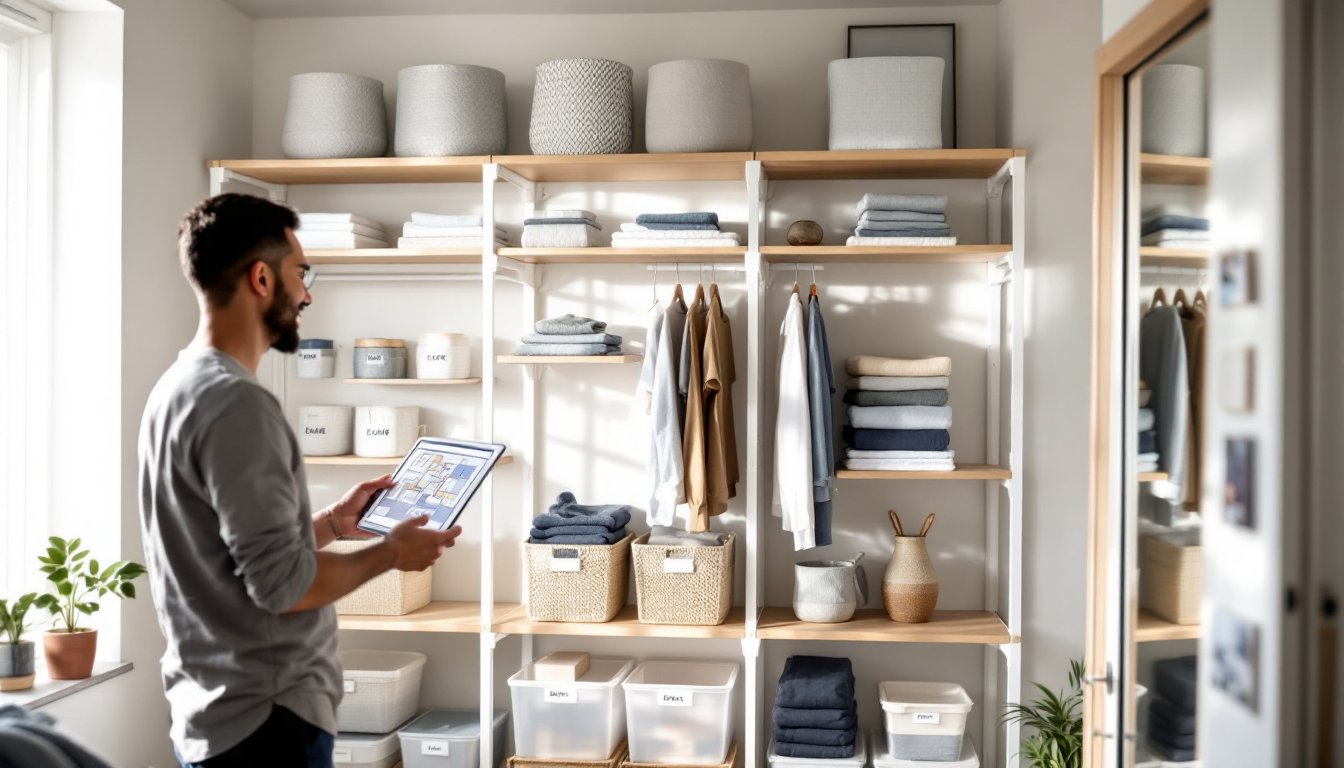
Examples include closet organization apps that map your space and show furniture placement, pantry systems you design on a computer before ordering shelves and containers, or garage storage that uses modular wall-mounted panels and bins. The “software” part isn’t necessarily digital, it’s the planning methodology. The “defined” part means the storage adapts to your actual habits and room dimensions, not a one-size-fits-all approach.
This approach works because it removes guesswork. Instead of buying a pre-made shelving unit and hoping it fits, you measure, plan, and order components that align exactly with your space and lifestyle.
Key Benefits for Homeowners and DIY Projects
Smart storage solutions offer real advantages over traditional approaches, especially for DIYers willing to invest time in planning.
Maximized Space. A well-designed storage system can increase usable capacity by 30–50% compared to haphazard shelving. By understanding how tall your containers need to be, how deep your shelves should be, and where vertical space goes unused, you eliminate wasted inches.
Flexibility and Adaptation. Life changes, you have kids, your hobbies shift, your garage gets a workshop corner. Modular systems expand or reconfigure without tearing everything out. A shelving unit designed with adjustable shelves or movable components handles this gracefully.
Reduced Stress and Time Loss. When everything has a defined place, you spend less time searching. Studies on home organization show that families lose an average of 4 hours per week looking for misplaced items. A software-defined approach cuts that dramatically.
Lower Cost Over Time. Because these systems reduce over-buying (you know exactly what you have and where it fits), you spend less on duplicate items and replacements. You also avoid the cost of replacing ill-fitting storage units that didn’t work.
Better Aesthetic Control. When storage is planned rather than cobbled together, it looks intentional. ASI Storage Solutions: Transform and similar structured approaches let homeowners create finished-looking spaces even on a modest budget.
How to Choose the Right Storage System for Your Space
Assessing Your Storage Needs
Start with an honest inventory. Walk through the space you’re organizing and categorize what needs to be stored: clothing, seasonal gear, tools, pantry items, paperwork, toys, whatever applies. Don’t skip this step, it’s the hardest part and the most critical.
Measure your space carefully. Grab a tape measure and get exact dimensions: wall heights, depth from wall to window or appliance, ceiling obstructions (vents, light fixtures, low beams). Sketch a rough overhead view. Note where outlets, doors, and windows are. These details prevent expensive mistakes.
Consider access patterns. Items you use weekly should be eye-level and within arm’s reach. Seasonal stuff can live higher or deeper. Things you rarely touch belong in the hardest-to-reach spots. This is where the “software” part matters, you’re designing retrieval into your layout.
Think about growth. Will your family expand? Is this hobby temporary or long-term? Does your business use a corner of your garage? Temporary Storage Solutions: Reclaim can bridge gaps, but your primary system should assume realistic growth.
Budget and Installation Considerations
Budget varies widely. Basic systems, shelving, bins, labels, might cost $200–$500 for a closet or small garage section. Mid-range solutions with custom components run $500–$2,000. High-end custom systems can exceed $5,000. Region, material quality, and whether you hire help all affect final costs.
Decide on your labor. Some projects are weekend DIY work: installing shelves, organizing bins, labeling. Others require more skill, custom closet systems with adjustable brackets, built-in dividers, or finishing touches. Be honest about your comfort level. A poorly installed shelf is a safety hazard: hire a contractor if you’re unsure.
Choose durable materials. Plywood and solid wood shelves outlast particleboard. Metal shelving brackets resist sagging better than cheap plastic. Quality storage containers in consistent sizes stack efficiently and last years. Cheap components fail, forcing replacement, false economy.
Software tools like Houzz let you visualize layouts before buying. Spending 2–3 hours planning saves weeks of frustration and returns. Take photos of your space, upload them to a design app, and experiment with layouts digitally. Tools like Tom’s Guide often review storage products and organizational systems worth exploring for inspiration.
Factors like lumber size (nominal vs. actual dimensions, a 2×10 is really 1.5″ × 9.5″), shelf span (how far apart brackets can be without sagging under load), and weight limits matter. A shelf rated for 50 lbs per foot can’t hold your book collection everywhere. Do the math upfront.
Practical Tips for Implementing Smart Storage Solutions
Start small. Don’t overhaul your entire home at once. Pick one closet, one shelf, or one corner. Get it right, learn what works, then expand. You’ll refine your system as you live with it.
Invest in measurement. Get a laser tape measure or a long metal measuring tape. Cheap plastic ones stretch and give bad readings. Accurate measurements are non-negotiable.
Use a label maker. A simple label maker ($15–$30) transforms organization. Labels make it easy for everyone in the household to put things back correctly. Hand-written labels fade and look sloppy.
Document your system. Take photos of organized zones. If family members move things, you have a reference. This is especially helpful for pantries, tool areas, or shared spaces.
Prioritize access over aesthetics. The most beautiful storage system fails if you can’t reach what you need. Function first. Pretty comes second.
Plan for seasonal shifts. Before winter or summer, rotate items. Heavy coats leave, light layers arrive. A well-designed system has dedicated seasonal zones that make swaps easy.
Don’t over-containerize. Resist buying cute bins for everything. Excess containers cost money and waste space. Use what you have first. Upgrade only where needed.
Check load limits. Walls have stud spacing (typically 16 inches on center). Anchors and brackets rate to specific weights. Drill into studs for heavy loads. A 200-pound shelving unit needs proper support, or it comes down, expensive and dangerous.
Allow for overflow. Life expands. Leave 15–20% of your storage capacity open. When you’re at 95% capacity, the system breaks down because there’s nowhere for new items.
Review and adjust quarterly. Every three months, look at what’s working and what isn’t. Move things around. Keep it responsive. Digital Trends often covers home organization tech that can assist with tracking inventory digitally if that appeals to you.
One practical note: if your project involves structural changes, cutting into walls, removing load-bearing supports, or adding heavy storage to masonry or foundation walls, get a permit and consult a structural engineer or contractor. Local building codes vary, and some work requires licensed professionals. It’s not worth cutting corners on safety.
Conclusion
Software defined storage solutions aren’t complicated or expensive, they’re just thoughtful. Measure, plan, choose modular components, and carry out one section at a time. The payoff is a home where you know where everything is, your space feels larger, and your weekends aren’t spent hunting for a screwdriver buried under three other bins. Start this week, even if it’s just a single closet. You’ll wonder why you didn’t do it sooner.