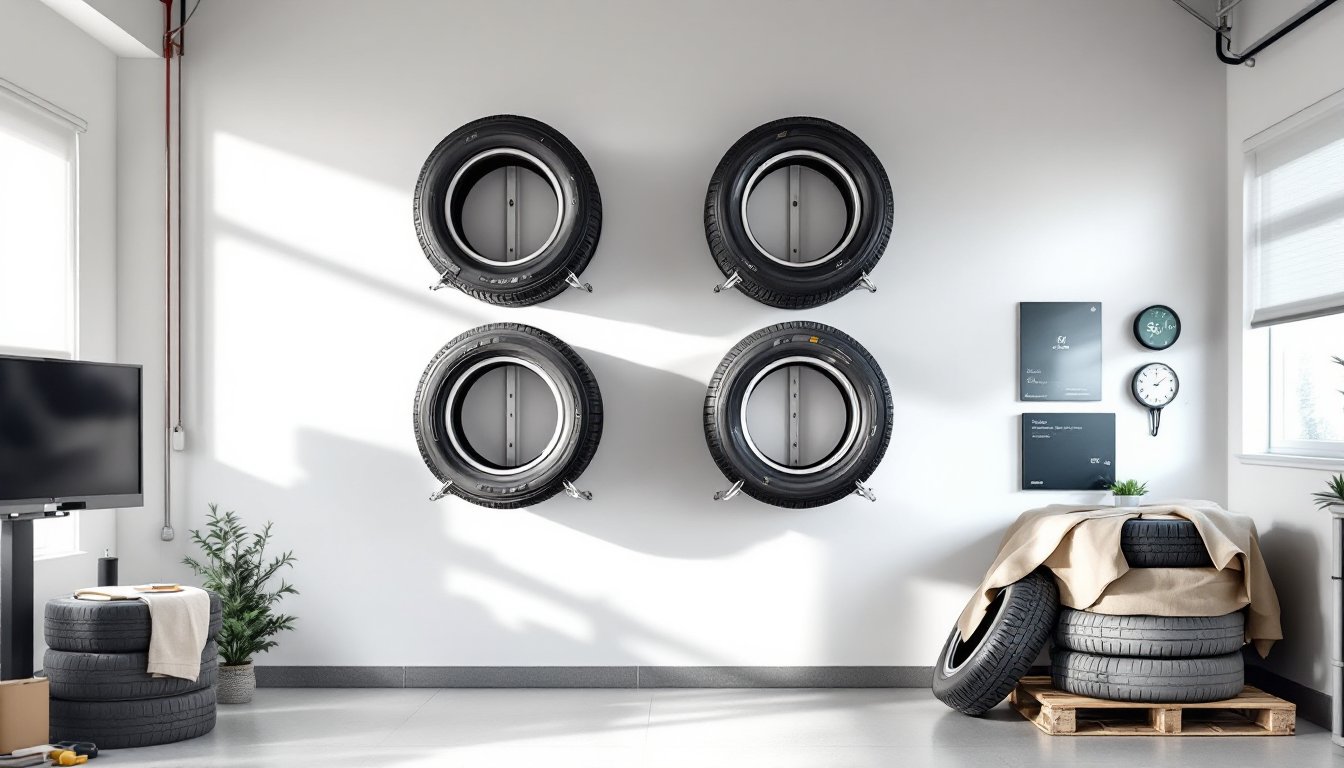
Tires sitting unused for months can degrade faster than you’d expect, UV damage, temperature swings, and ozone exposure all take their toll. Whether you’re storing winter tires during summer or seasonal rims in the off-season, how you keep them matters as much as the tires themselves. Neglect the storage basics, and you might find your treads cracked, sidewalls weakened, or rubber dry-rotted when you need them again. This guide walks you through the conditions that preserve tire lifespan, the storage methods that actually work, and the organization tricks that’ll save you time next season. Let’s make sure those tires stay road-ready.
Table of Contents
ToggleKey Takeaways
- Proper tire storage solutions can extend tire life by one to two seasons by protecting rubber compounds from UV rays, temperature fluctuations, and ozone exposure that cause cracking and dry-rot.
- Store tires in cool, dry, dark conditions between 40°F and 85°F with humidity below 65%—indoor climate-controlled spaces like basements or garages are ideal, while outdoor storage requires weatherproof protection.
- Wall-mounted racks or horizontal PVC pipe mounts ($15–150) are space-efficient for mounted tires, while stacked unmounted tires should rest on clean pallets with breathable (not plastic) coverings to prevent moisture damage.
- Label each tire with vehicle type, season, storage date, and tread depth, and inspect them every two to three months for cracks, bulges, or discoloration to catch degradation early.
- Never expose stored tires to direct sunlight or moisture, and ensure air circulation on all sides—even a modest weatherproof shed ($150–600) offers significant protection compared to unprotected outdoor storage.
Why Proper Tire Storage Matters for Your Home
Your tires are an investment, a set of four quality tires can run $600 to $1,500 depending on vehicle and quality. Storing them wrong wastes that money faster than a blowout on a pothole. When tires sit exposed to sunlight, extreme heat, cold, or moisture, the rubber compound breaks down. Ozone in the air causes cracking on the sidewalls: UV rays degrade the rubber’s structure: and temperature fluctuations cause the rubber to expand and contract, weakening its integrity.
Proper storage can extend tire life by one to two seasons compared to neglectful storage. That’s not just about saving money on replacements, it’s about safety. A tire stored in poor conditions may look fine but fail under real driving stress. The wall integrity suffers invisibly. Keeping tires in stable conditions preserves their grip, load rating, and durability. Think of it as insurance for your investment.
Optimal Storage Conditions for Tire Longevity
The ideal tire storage environment is cool, dry, and dark. Aim for temperatures between 40°F and 85°F (5°C to 29°C), with humidity below 65%. Avoid direct sunlight, UV rays degrade rubber compounds faster than almost anything else. If your storage spot gets warm in summer, that’s a problem: if it freezes in winter, that’s less critical but still not ideal.
Moisture is the silent killer. A wet basement or outdoor storage exposed to rain will corrode the rims, stain the rubber, and promote mold growth. Store tires in an area with good air circulation to prevent moisture accumulation. If tires are still mounted on rims, clean them before storage and dry them thoroughly. Remove any dirt or brake dust from the wheel wells, these trap moisture against the tire.
Humidity matters, too. An unheated garage with a concrete floor can work if it stays reasonably dry: a basement with groundwater seepage will not. If you’re unsure about moisture, place a humidity meter in your storage area during the season, it’s a $10 tool that clarifies whether your chosen spot is suitable. Damp conditions don’t just age tires: they also rust steel rims and corrode aluminum.
Best Indoor Storage Options for Seasonal Tires
Wall-Mounted and Garage Storage Ideas
A dedicated climate-controlled area indoors is the gold standard. Your basement, interior garage wall, or spare room beats outdoor storage every time, just ensure the space stays reasonably cool and dry.
Vertical wall storage is space-efficient and keeps tires off damp concrete floors. A simple tire rack or wall-mounted tire hanger costs $40 to $150 and holds four tires per unit. Heavy-duty steel racks support the tire weight without sagging over months. If you’re storing tires on rims, hang them from the center hole so weight distributes evenly, not balanced on the outer edge. This prevents the tire from stretching or warping under its own weight.
For a budget option, PVC pipes mounted horizontally on studs can cradle tires. Use 4-inch PVC cut to length, mount it 12 to 18 inches apart on wall studs, and you’ve got a functional ($15–30) solution. The tire sits inside the pipe loop, supported along its length rather than at a single point.
Freestanding tire racks work if wall space is tight. A 4-tire steel rack costs $50 to $100 and doesn’t require mounting. Keep it away from windows and doors where sun creeps in.
If tires are unmounted (rubber only, no rim), stack them flat on a clean pallet or wooden pallets, never directly on concrete, which wicks moisture. Cover the stack loosely with a breathable tarp or old sheet to block dust and light without trapping humidity. Tight plastic sheeting creates condensation: avoid it.
Outdoor Tire Storage Solutions and Protection
Outdoor storage is your last resort, it’s harsher, but sometimes it’s the only option. If you must store tires outside, protection is non-negotiable.
Weatherproof storage sheds or lockable plastic deck boxes designed for tires offer moderate protection. Look for containers that are opaque (not clear), elevated off the ground, and well-ventilated to prevent moisture buildup inside. A 4 × 8 foot outdoor shed ($300–600) holds a full set plus spare with room: smaller deck boxes ($150–300) squeeze in four tires if you stack them. Both should be anchored to prevent tipping in wind.
If using a shed, paint it a light color to reflect heat and reduce internal temperature swings. Install a small vent at the top and bottom to allow air circulation without letting rain in, screened vents work well.
For a tarp-based method, stack tires on a ground-level pallet (not bare soil, wood separates them from moisture), and drape a UV-resistant opaque tarp over the stack. Secure it with bungee cords or rope, but leave 2 to 3 inches of gap at the bottom for air flow. This isn’t ideal long-term, but it beats full sun exposure. Check under the tarp monthly for moisture accumulation: if you see dampness, loosen the covering slightly.
Never store tires directly against a wall or fence. Air needs to circulate on all sides. And don’t store them near heat sources, gas grills, or areas where oil or gasoline may spill, these degrade rubber compounds.
Popular Mechanics recommends considering your local climate when planning outdoor storage: high-heat regions (Southwest, Deep South) will age tires faster even with shelter.
Organization Tips for Easy Access and Maintenance
A tire storage system is only useful if you can find what you need when you need it. Label everything clearly.
If tires are on rims, use a permanent marker or adhesive label on each tire indicating the vehicle (e.g., “2018 Honda Civic, Winter”), season, date stored, and tread depth at storage time. Take a photo of the tread depth with a penny or gauge, you’ll want to check tread before reinstalling. This takes five minutes and saves guesswork in spring.
For spare tires or multiple sets, create a simple inventory spreadsheet or note listing:
- Tire size and load rating
- Which vehicle they fit
- Date stored
- Last tread depth measurement
- Storage location
Arrange tires logically, nearest to your garage exit for the set you’ll use first, farther back for reserves. If you have limited space, investigate recreational storage solutions that incorporate multi-season gear: some systems let you rotate stock efficiently.
Check stored tires every two to three months, especially in high-heat or high-humidity seasons. Look for cracks, bulges, or discoloration, signs of trouble. Spin wall-mounted tires occasionally so they don’t permanently flatten on one side.
When you reinstall tires, check the valve stems for cracks, clean the wheels thoroughly, and inspect the tread depth one more time before mounting. If tread is below 4/32 inch (the legal minimum is 2/32), don’t reinstall: the tires have aged out. Some homeowners also rotate tires between vehicle wheels during storage to ensure even wear when they go back into service.
Conclusion
Smart tire storage boils down to four things: keep them cool, keep them dry, keep them dark, and keep them organized. Indoor storage in a stable environment beats outdoor exposure every time, but even a modest outdoor shelter protects tires better than nothing. Label your tires, track tread depth, and check them periodically. A few dollars spent on a basic rack or shed now saves you replacing degraded tires when you need them most. Treat storage as part of tire maintenance, not an afterthought, your wallet and your safety will thank you.