Most homes accumulate clutter without anyone noticing, it happens gradually, one overlooked corner at a time. Smart storage solutions are no longer about fancy organizing products: they’re about intentional design that fits how people actually live. Whether dealing with a cramped kitchen, an overflowing closet, or a chaotic entryway, strategic storage can transform both the functionality and feel of a space. The key is understanding which solutions work for each room and which ones make the biggest impact on daily life. This guide walks through practical, achievable storage strategies that don’t require a renovation budget.
Table of Contents
ToggleKey Takeaways
- Smart storage solutions transform homes by using intentional design that fits how people actually live, eliminating clutter and boosting mental clarity.
- Vertical storage is the game-changer for kitchens and living rooms—wall-mounted shelves, pegboards, and doubled closet rods instantly maximize space without renovation costs.
- Kitchen storage succeeds through cabinet organization with pull-out drawers, clear uniform containers, and labeling systems that prevent food waste and decision fatigue.
- Closet fundamentals like doubled rods, shelf dividers, and strategic ‘hot zone’ placement keep frequently worn items accessible while hiding off-season clothes.
- Multi-functional furniture pieces like ottomans with storage, coffee tables with drawers, and entryway benches solve clutter problems while serving dual purposes.
- Budget-friendly DIY projects under $100—including pegboard walls, open shelving from reclaimed wood, and magnetic knife strips—deliver professional results without contractor costs.
Why Smart Storage Matters for Modern Homes
Smart storage goes beyond aesthetics. Poorly organized spaces waste time, hide things people actually need, and can even strain relationships when household members can’t find basics or feel cramped. A thoughtfully designed storage system cuts down on decision fatigue, when everything has a designated spot, daily routines run smoother.
In 2026, homeowners are moving past one-size-fits-all solutions. Instead, they’re building custom-fit systems that account for how they use each space. This means understanding traffic patterns, frequency of access, and what items genuinely belong in a room versus what just landed there by accident.
Building smart storage also protects belongings. Proper organization keeps items off the floor, protected from moisture and pests, and easier to maintain. Kitchen items stored correctly last longer: seasonal gear stays protected: and daily essentials stay accessible without creating visual chaos. The real payoff is reclaiming usable space and the mental clarity that comes with it.
Kitchen Storage Ideas That Work Hard for You
Kitchen storage is the easiest place to start because kitchens are high-traffic zones where every inch counts. Most kitchens have wasted vertical space and underutilized cabinet interiors.
Cabinet Organization forms the foundation. Pull-out drawers inside cabinets make back spaces accessible without reaching. Under-sink organizers (sliding tiered racks or pull-out bins) prevent that classic chaos of cleaning supplies and random items scattered everywhere. Vertical dividers in cabinets for baking sheets and cutting boards prevent the dreaded “leaning tower” collapse.
Vertical Storage is the game-changer. Wall-mounted magnetic strips hold knives safely and visibly. Open shelving above counters (or inside glass-front cabinets) keeps frequently used items within arm’s reach. Pegboard systems with hooks work better than most realize for hanging colanders, measuring cups, and utensils. The rule: if something’s used regularly, it earns prime real estate: seasonal items move to higher shelves or deeper cabinets.
Pantry Strategy separates success from chaos. Clear, uniform containers (matching heights) let people see what’s running low without opening every box. Label everything, including shelf positions and expiration dates. Label makers, even basic ones, prevent guessing games and food waste. The Kitchn regularly covers kitchen storage setups that maximize organization without sacrificing style.
Unseen storage works just as hard: lazy Susans in corner cabinets (making back items accessible), stacking shelves that double cabinet height, and drawer dividers for utensils prevent sprawl. The goal is using actual cubic space, not just surface area.
Bedroom and Closet Organization Hacks
Bedrooms should feel restful, not cluttered. Closets deserve special attention because they’re either working hard or silently failing, there’s rarely a middle ground.
Closet Fundamentals start with rods and shelving. Standard 5-foot rods can handle about 30 pounds of hanging clothes: reinforced rods tolerate more. Doubling rod height with a second rod on one side creates 50% more hanging space instantly, suits and pants on top, shorter items (shirts, folded sweaters) below. This requires approximately 16″ of vertical clearance between rods and stronger brackets rated for the weight.
Shelf Division prevents the avalanche effect. Fabric dividers (similar to shelf bookends) keep folded stacks upright and separated by category. Clear plastic bins on upper shelves hold off-season items: pull-out drawers in closets keep socks, underwear, and accessories organized without digging through piles.
Door Real Estate is often ignored. Over-door hooks hold belts, scarves, and hats. Shoe racks mounted on the door (whether over-door style or a shoe shelf mounted to the inside) free floor space. Some people use the back of closet doors for a hanging pocket organizer that holds jewelry, small accessories, or even folded items.
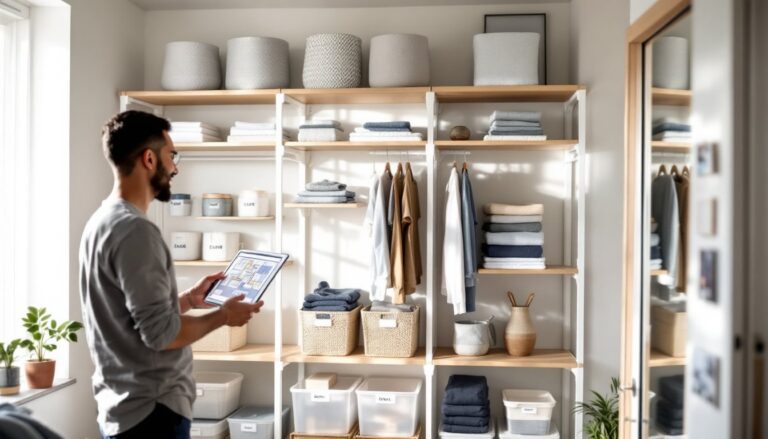
A practical closet hack: hang items you wear frequently at eye level in the center, it’s the “hot zone.” Off-season clothes, formal wear, and rarely-touched items migrate to sides and corners. Clothes Storage Solutions: Transform your closet chaos into style and order through thoughtful arrangement.
For under-bed storage, use low-profile plastic bins on wheels. They slide in and out easily and hide items that don’t need to be seen daily. Label the front so people know what’s inside without opening each one.
Living Room and Entryway Storage Solutions
Vertical Shelving and Wall-Mounted Options
Living rooms and entryways take the most visual punishment from clutter because these are transition zones. Vertical storage draws the eye upward and tricks spaces into feeling larger.
Wall-Mounted Shelves anchor organization. Floating shelves (supported by internal brackets, typically rated for 25–50 pounds depending on depth and material) look sleek and work in narrow spaces. Install shelves at 18–24″ intervals vertically: this feels balanced without looking cramped. Open shelving works best when items are intentional: books arranged by color or size, a few curated decorative pieces, and functional items like baskets containing remotes or magazines.
Vertical Shelving stretches from floor to ceiling more efficiently than scattered shelves. Slim corner shelves maximize dead space. Tall bookcases (some rated for 200+ pounds per shelf) do double duty: holding books, displaying family photos, and concealing clutter in attractive baskets on lower shelves. Stylish Storage Solutions for small spaces show how vertical thinking transforms cramped entryways into functional hubs.
Entryway Benches with built-in storage solve the “dumping ground” problem. A bench with cubbies or shelves below holds shoes, sports gear, and seasonal items while providing seating. Some designs include hooks above for coats and backpacks. When every family member has an assigned cubby, accountability follows.
Multi-Functional Furniture Pieces
Smart furniture does more than fill space, it solves problems disguised as pieces.
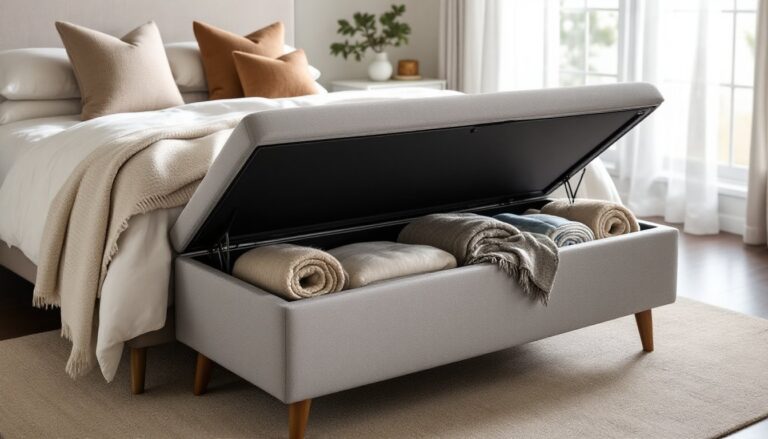
Ottoman Cubbies with dividers hold blankets, pillows, and magazines without looking like a storage unit. They work as footrests by day and become storage access at night. Sliding Ottoman Trays keep contents hidden while remaining accessible.
Coffee Tables with Drawers and shelves below work harder than solid-top versions. Use drawers for remotes, coasters, and game pieces: lower shelves for baskets holding blankets or decorative books.
Media Consoles with shelving, cabinets, and drawers organize entertainment equipment, streaming devices, DVDs, and gaming consoles. Closed cabinets hide equipment that doesn’t look intentional when exposed: open shelves display what’s attractive or frequently accessed.
Wall-Mounted Cabinets (similar to kitchen wall storage) work in living rooms and entryways when finished to match décor. Shallow cabinets along a hallway hold coats, keys, and mail without protruding far from the wall.
The common thread: every piece should serve two purposes. Storage that’s hidden inside furniture feels less cluttered to the eye while keeping frequently accessed items within reach. Recreational Storage Solutions: Transform clutter into stylish organization works across living spaces with adaptable principles.
Budget-Friendly DIY Storage Projects
Not every solution requires a shopping spree or contractor visit. Several DIY projects cost under $100 and take a weekend.
Pegboard Wall Organization runs $20–40 for materials. A sheet of ⅜” pegboard ($15–25), some 2×4 lumber for backing ($10), wall anchors, and hooks create adjustable storage. Mount the pegboard 1″ from the wall (using spacers) so hooks seat fully. Pegboard works brilliantly in entryways for keys and coats, kitchens for utensils, and garages for tools. A stud finder ensures anchors go into studs when possible: toggle bolts or heavy-duty anchors work on drywall alone for moderate loads (under 50 pounds total).
Open Shelving from Reclaimed Wood and brackets looks custom but costs less. Reclaimed 1×10 or 1×12 lumber ($30–50 depending on source), heavy-duty L-brackets or floating shelf brackets ($20–30), and a level are the essentials. Mark stud locations with a stud finder, use ¾”-long wood screws rated for the bracket’s load capacity, and level before tightening. A 1×12 shelf spanning 36″ easily holds 100 pounds when properly supported.
Under-Stair Storage Boxes work if stairs exist. Custom bins on wheels that fit snugly use wasted space. Plywood, caster wheels ($10–20), and handles turn dead space into accessibility.
Magnetic Knife Strips ($15–30) beat bulky knife blocks and free counter space. Mount a stainless steel magnetic strip on backsplash or side wall using toggle bolts if hitting studs isn’t possible. Arrange by frequency of use.
Safety matters even in basic projects: always wear safety glasses when using power tools, use a stud finder to avoid hitting electrical wiring, and when mounting anything above 12″ high, use appropriate anchors for drywall weight ratings. Smart Tips for Storing seasonal items applies the same structural principles to off-season gear.
When installing shelves, confirm load ratings on all hardware. Putting 150 pounds on brackets rated for 50 pounds is asking for a falling shelf, and potential injury. Test before fully loading.