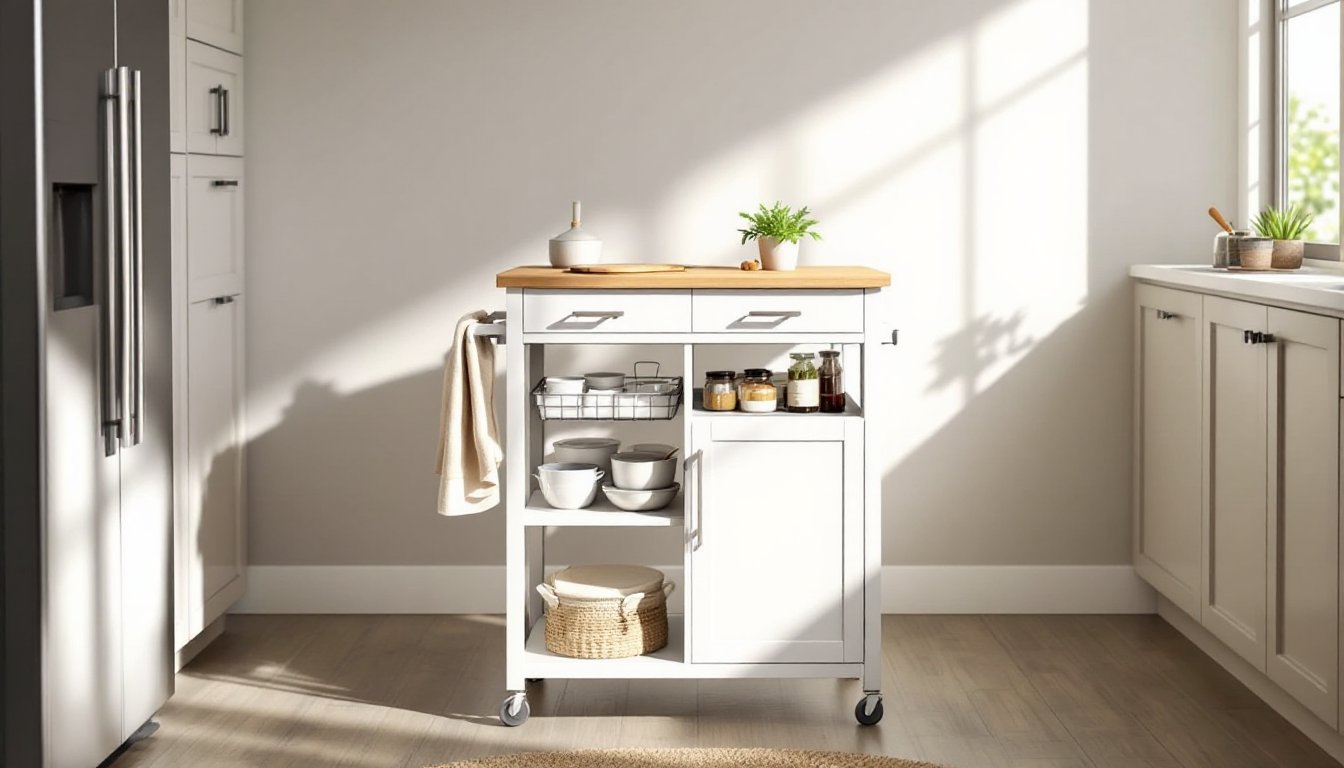
A kitchen island cart with storage is one of the smartest additions you can make to your cooking space, especially if you’re working with a smaller kitchen or renting and can’t commit to a built-in island. These mobile workhorses provide extra counter space, storage for cookware and ingredients, and the flexibility to move them wherever you need them. Whether you’re prepping a holiday meal or need a temporary staging area for groceries, a well-designed cart becomes an indispensable part of your kitchen workflow. This guide walks you through what to look for, the styles that work best, and how to pick the right size and features for your space.
Table of Contents
ToggleKey Takeaways
- A kitchen island cart with storage provides flexible, mobile counter space and storage without requiring permanent installation, making it ideal for renters or smaller kitchens.
- Material choice significantly impacts durability and maintenance—wood offers warmth but needs regular oiling, stainless steel resists stains and cleans easily, and laminate provides an affordable middle ground.
- Proper sizing and placement are critical: standard carts measure 24–36 inches wide and 34–36 inches tall, and you should measure your kitchen carefully to avoid blocking appliance access or traffic flow.
- Smart storage features like adjustable shelves, drawers, built-in spice racks, and towel bars maximize functionality while keeping your countertop clear for actual food prep.
- Workflow improvement comes from positioning your most-used items on the cart at arm’s reach—matching the cart’s storage layout to how you actually cook reduces daily frustration and steps between tasks.
What Is a Kitchen Island Cart With Storage?
A kitchen island cart with storage is a mobile, free-standing unit designed to expand counter and storage capacity without permanent installation. Unlike a built-in island, it sits on wheels (usually locking casters) so you can reposition it as needed. Most feature a solid countertop, typically butcher block, stainless steel, or laminate, positioned 34–36 inches high to match standard counter height, with shelves, drawers, or cabinets underneath.
These carts come in various configurations: single-shelf units for minimal storage, multi-tiered shelving for open organization, or enclosed cabinets for hidden storage. Some include towel bars, spice racks, hooks, or utensil compartments built into the design. The bottom shelf or base is usually open or partially enclosed, which makes the cart feel less bulky in smaller kitchens and allows for toe space when standing at the countertop.
What sets a kitchen island cart apart from a simple utility cart is its kitchen-specific design: the countertop is finished to withstand moisture and spills, dimensions align with standard kitchen heights, and materials are chosen for durability around food prep. Think of it as a scaled-down, movable version of a full kitchen island that doesn’t require a contractor or permanent plumbing/electrical work.
Key Benefits for Your Kitchen Layout
Adding counter space is the obvious win, but a kitchen island cart with storage solves multiple problems at once. If your kitchen has limited prep area, the cart gives you a dedicated surface for chopping, mixing, or staging ingredients. The built-in storage keeps everyday items within arm’s reach, pots, pans, cutting boards, mixing bowls, so you’re not constantly running back to cabinets across the room.
For renters or anyone hesitant about kitchen renovation, the mobility is a game-changer. You can position it where you need it: pull it next to your stove for efficient pasta-night prep, position it as a beverage station during entertaining, or tuck it against a wall when you need floor space. That flexibility means one cart adapts to multiple uses without commitment.
Another underrated benefit: workflow improvement. A properly placed cart with the right storage layout reduces the steps between tasks. If your spice rack, knives, and mixing bowls are on the cart rather than scattered across three different cabinets, prep becomes faster and less frustrating. Some designs also serve as a visual break in an open-concept kitchen, subtly defining the cooking zone. When organized well, a cart with intentional storage can actually make your kitchen feel less cluttered because items have a designated home.
Styles and Materials to Match Your Home
Wood and Classic Designs
Solid wood carts, typically made from oak, maple, or hickory, bring warmth and traditional charm. A butcher-block countertop on a wooden cart is durable and food-safe, though it requires occasional oiling to prevent drying and cracking. Wood construction works well in farmhouse, rustic, or cottage-style kitchens. The downside: wood is heavier, less water-resistant than other materials, and can stain or warp if exposed to consistent moisture. If you choose wood, look for sealed or treated surfaces and be diligent about wiping spills immediately.
Neutral wood finishes (natural oak, whitewash, or soft gray-stained) complement most interiors and hide marks better than dark stains. Wood carts often include open shelving, which looks attractive but requires thoughtful organization since everything is visible. This is where smaller storage baskets or containers become handy, they contain clutter while keeping items accessible.
Modern Metal and Glass Options
Stainless-steel carts are the practical choice for those who prioritize durability and easy cleanup. A brushed stainless-steel countertop resists staining, won’t dent easily, and wipes clean in seconds. Steel shelves or frames work well in contemporary, industrial, or minimalist kitchens. The trade-off: stainless steel shows fingerprints and water spots, so you’ll need to wipe it regularly if you want a pristine look. Some people embrace this and see the patina as part of the aesthetic.
Glass shelves paired with metal frames offer a sleek, modern appearance and make items easy to spot. But, glass is heavier and more breakable than other options, and cleaning (especially around spill splash) can be tedious. Laminate countertops in granite or marble patterns are affordable, easy to clean, and available in dozens of designs. They won’t last as long as butcher block or stainless steel under heavy use, but they’re a good middle-ground option if you want aesthetics and durability without wood maintenance. When browsing designs, consider how the cart will sit beside your existing cabinetry. A stainless cart next to warm wood cabinets creates visual interest: a matching wood cart blends seamlessly. There’s no single right answer, it depends on your style and how much maintenance you’re willing to commit to. For more detailed approaches to kitchen storage planning, kitchen corner cabinet storage solutions offer similar strategic thinking about spatial efficiency.
How to Choose the Right Size and Configuration
Measure your kitchen carefully before buying. The cart needs to fit your space without crowding traffic flow or blocking appliance doors. A standard kitchen island cart is 24–36 inches wide, 18–24 inches deep, and 34–36 inches tall. If your kitchen is tight, a narrower 18-inch-deep model saves space while still providing meaningful counter area. Wider carts (36 inches+) offer more prep room but may feel cramped in compact kitchens.
Consider where you’ll position it. Will it live in one spot or move frequently? If it’s permanent, a slightly larger cart makes sense. If you plan to shift it based on the meal or event, go smaller and lighter for easier maneuvering. Check that locking casters (wheels) are included, unlocked wheels are a safety hazard when you’re applying pressure during chopping or mixing.
Think about what you’ll store. If you have many small items (utensils, spices, gadgets), look for a cart with drawers or enclosed shelves with dividers. Open shelving is stylish but requires daily organization to avoid looking cluttered. Some people choose a hybrid: open shelves on top for display and frequent-use items, closed storage below for bulky cookware or less-attractive supplies.
When comparing heights, remember that countertops sit 34–36 inches tall, but if you’re particularly tall or short, test the height in a showroom if possible. A cart that’s too low or too high creates strain during prep work. Finally, check weight capacity. Most carts hold 150–300 pounds on the top surface and more on shelves, but if you’re planning to store cast-iron cookware or a mixer, verify the specs. A “max load” label is honest: if it’s not listed, the cart may not be rated for heavy gear.
Smart Storage Features to Look For
The best kitchen island carts maximize storage without feeling overcrowded. Adjustable shelves are a practical feature, they let you customize spacing based on what you store. A shelf that fits a 12-inch mixing bowl can be raised if you later swap it for smaller items.
Built-in features add functionality. A towel bar on the side holds kitchen towels within reach. A spice rack or narrow shelving for jars keeps seasonings organized and visible. Some carts include a knife block, utensil holder, or hook rack for hanging pots, measuring cups, or dish towels. These integrated features save you from buying extra organizers and keep the countertop itself clear for actual prep work.
Drawers are more practical than open shelves for utensils, gadgets, and small items you don’t want to display. Look for smooth-gliding drawer slides, cheap carts often have sticky or wobbly drawers that frustrate you daily. If you’re handy, you can add aftermarket drawer organizers (dividers, spice inserts, utensil trays) to customize storage, but not all carts accommodate this easily.
Baskets or bins that slot into open shelves provide attractive, removable storage for items you want contained but accessible. This works especially well for meal prep ingredients or non-perishables. According to The Kitchn, intentional organization of mobile storage keeps kitchens feeling spacious even when square footage is tight.
If you’re considering a DIY build, Ana White’s woodworking plans provide free step-by-step instructions for a solid wooden cart, a good project if you have basic tools and comfort with a miter saw or circular saw for cutting lumber. For those new to woodworking, The Handyman’s Daughter walks through beginner-friendly furniture projects that demystify the process.
When assessing storage features, be honest about how you’ll use it. A spice rack is useless if your spices stay in a pantry cabinet. A tall, narrow design wastes space if your pots are all short and squat. The best carts feel intuitive, your most-used items are most accessible, and everything has a logical spot. Test the configuration mentally: where would your cutting board live? Your mixing bowls? Your daily-use oils and utensils? If the cart doesn’t accommodate your workflow, keep looking.