A kitchen hutch storage cabinet sits at the intersection of function and beauty, a place to stash your good china, cookbooks, or small appliances while anchoring a room’s style. Whether you’re drawn to vintage charm, sleek modern lines, or practical transitional design, a quality hutch transforms both how you organize and how your kitchen looks. This guide walks you through selecting the right piece for your space, styling it like a pro, and keeping it in top shape for years to come.
Table of Contents
ToggleKey Takeaways
- A kitchen hutch storage cabinet combines display and storage in one versatile piece, typically 36–48 inches wide and 60–84 inches tall, without requiring permanent wall anchoring.
- Solid wood construction with soft-close hinges, adjustable shelves, and quality finishes outlasts budget options and maintains value, making it a smarter long-term investment.
- Mix open shelves with closed storage, curate displays using odd numbers and varied heights, and leave breathing room to achieve an intentional, clutter-free look.
- LED interior lighting instantly transforms a kitchen hutch storage cabinet from functional storage into a showpiece that highlights glassware and decorative objects.
- Proper maintenance—weekly dusting, immediate spill wiping, monthly hinge checks, and yearly conditioning—extends a hutch’s lifespan to 15–20 years or more.
- Measure doorways and wall height before purchasing, test finishes in person, and account for budget ($400–$800 basic, $1,200–$2,500 mid-range, $3,000+ custom), then consider DIY or stock options based on your skill level.
What Is a Kitchen Hutch Storage Cabinet?
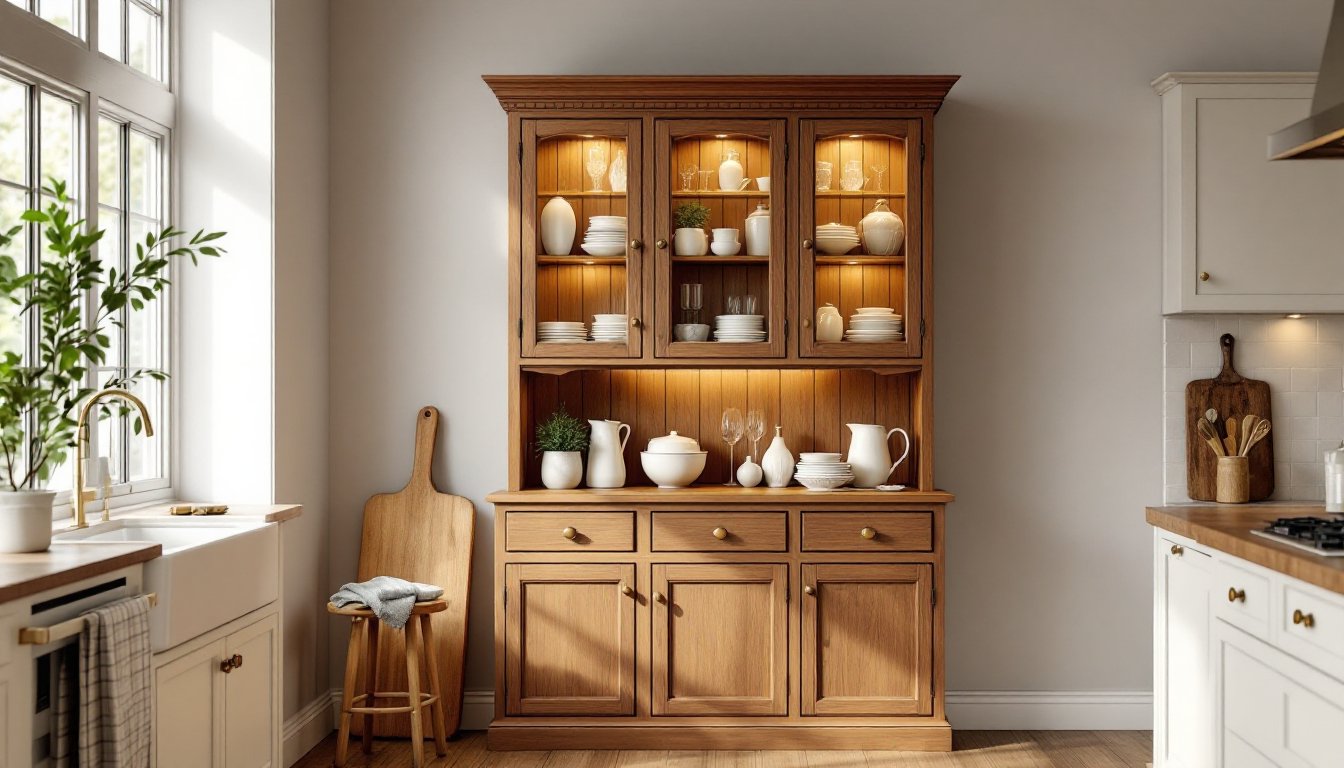
A kitchen hutch is a standalone or built-in cabinet that combines display and storage in one tall, imposing piece. Most hutches are 36 to 48 inches wide and stand 60 to 84 inches tall, tall enough to command attention but narrow enough to tuck against a wall without dominating the room.
Traditionally, hutches feature an upper section with glass doors or open shelves (for displaying plates, glassware, or decorative objects) and a solid lower cabinet base with closed storage for less photogenic items. Some modern versions flip the script, offering all closed storage or all open shelving depending on your needs.
They’re distinct from kitchen islands (which sit in the middle of the room) and wall-mounted cabinets (which are built into the structure). A hutch’s appeal lies in its versatility: move it when you redecorate, customize it to match your style, and use every square inch without feeling cramped. Unlike upper wall cabinets, hutches don’t require anchoring to studs and permit considerations the way structural modifications do, though if you’re securing a very tall piece, checking for stability and earthquake safety straps is smart.
Key Features and Design Styles to Consider
When evaluating a kitchen hutch, look at proportions, material, and finish. A hutch with a 1-inch solid wood top and adjustable shelves will outlast one with particle board and fixed shelving. Doors hinge type matters: soft-close hinges cost more upfront but eliminate decades of slamming. Interior light (via LED strips or puck lights) transforms a hutch from storage into a showpiece.
Style options span cottage, farmhouse, industrial, mid-century modern, and contemporary. A 5-piece painted wood hutch with decorative molding, arched glass doors, and turned legs reads cottage: the same hutch in stained walnut and straight lines becomes mid-century. Consider the rest of your kitchen and home. A Victorian hutch looks jarring next to minimalist cabinetry, while a sleek metal-frame piece fits naturally into an industrial loft.
Finish durability varies widely. Painted wood shows wear (especially near handles): stained wood hides dust better but shows water rings if you’re not careful. Laminate or veneered surfaces cost less and resist moisture but can’t be refinished as easily. For serious cooks, a hutch with a sealed wood or lacquered finish handles humidity and splashes better.
Open Shelving vs. Closed Cabinet Storage
Open shelves make items accessible and display-ready but expose everything to dust and kitchen grease. They work best for items you use regularly (everyday mugs, recipe books) or pieces you’re proud to show (vintage glassware, pottery). Closed cabinets hide clutter, protect contents, and feel more formal. Most people benefit from a mix: open shelves for curated displays and closed storage for day-to-day stuff.
If you choose open shelving, limit yourself, an overstuffed hutch looks chaotic. Arrange items in odd numbers (three stacked bowls, five mugs) and vary heights to create visual interest. Leave breathing room on shelves: cramming every inch defeats the purpose. For closed cabinets, use dividers and bins inside to maximize organization. A mixture of kitchen corner cabinet storage solutions and open displays often works best in smaller kitchens.
How to Choose the Right Hutch for Your Kitchen Space
Measure twice, buy once. Measure your wall (or intended location) width, the height from floor to ceiling, and any overhead obstructions (light fixtures, vents). Most hutches are 36 to 48 inches wide: if your wall is narrower, look for custom options or slimmer models around 30 inches. Account for baseboard height, many pieces sit 4 to 6 inches off the floor. Check doorway clearance if moving the hutch upstairs: 36-inch doors can pass through most interior doors at standard angles, but 48-inch-wide pieces may not.
Consider your kitchen’s color palette and lighting. A light oak or painted white hutch brightens a north-facing kitchen: a darker stain suits warm, well-lit spaces. Test finishes in person, photos lie under store lighting. If ordering online, request a swatch or sample finish.
Budget ranges widely. Budget options run $400–$800 (often particle-board construction, basic hinges, limited style variety). Mid-range solid-wood or quality veneered pieces cost $1,200–$2,500. High-end custom or vintage pieces exceed $3,000. Consider resale value: a well-made, timeless hutch appreciates or at least holds value: trendy styles date quickly.
If you’re handy, DIY furniture plans from established woodworkers offer affordable routes to custom-sized, quality hutches. Building one takes skill (dados, mortise-and-tenon joinery, finishing) but rewards you with exactly what you want. For those less confident, stock pieces from furniture retailers or budget-friendly hacks from existing IKEA cabinets offer faster, lower-risk routes. Corner cabinet storage solutions also pair well alongside a hutch in galley or open-concept kitchens where every inch counts.
Styling and Organization Tips for Maximum Impact
Styling a hutch follows simple rules. Start by purging: remove items you don’t love or use. For open shelves, curate a collection, dishes in one color family, books spine-out, a few decorative objects. Odd numbers and varied heights create rhythm.
Group similar items. Stack plates behind mugs: cluster glasses of one size. Leave negative space (empty shelf space) so displays breathe. A perfectly full hutch feels cluttered: an intentionally sparse one feels curated.
For closed storage, invest in drawer dividers, bins, and labels. Clear acrylic bins let you see contents without opening doors: fabric bins hide less-pretty items. Label everything, especially if multiple people use the kitchen. Store frequently used items at eye level: reserve high or low shelves for occasional pieces.
Lighting elevates a hutch instantly. Warm-white LED strip lights (3000K color temperature) installed along the top or inside shelves make glass and pottery glow. Battery-powered options avoid wiring headaches: plug-in versions offer better brightness and last longer.
Accessories matter but don’t overdress. A small cutting board, a vintage pitcher, or a potted herb plant add life without clutter. Rotate seasonal items, fall ceramics in September, holiday pieces in December, to keep the display fresh without rearranging the entire collection. The goal is a focal point that invites conversation, not a cluttered garage-sale display.
Maintenance and Care for Long-Lasting Performance
Wood hutches thrive with minimal, consistent care. Dust weekly with a soft cloth: for glass doors, use glass cleaner and a microfiber cloth to avoid streaks. Wipe spills immediately, especially near doors and along edges where moisture can seep in and cause swelling or finish damage.
Monthly, check hinges and knobs. Tighten bolts with a 1/4-inch wrench or socket set if drawers or doors feel loose. Soft-close hinges occasionally need damper fluid topped up, check your manual (or manufacturer website) for the specific lubricant. Don’t use silicone spray on wood hinges: it attracts dust. Light machine oil works better.
Seasonal deep cleaning keeps wood conditioned. Once yearly, apply a furniture polish or conditioning oil (follow product instructions, too much residue dulls the finish). Avoid spray polishes: they build up over time. If your hutch sits near a sink or dishwasher, wipe condensation weekly and consider a dehumidifier if your kitchen trends damp.
For laminate or veneered surfaces, gentle soap and water suffice. Avoid abrasive scrubbers and harsh chemicals. If veneer chips, glue it back down immediately with wood glue: if veneer peels, you’ll need professional regluing.
Preventive measures extend lifespan. Keep hutches away from direct sunlight (fades finishes and dries wood). Avoid hanging on damp or exterior walls without ventilation. If you have young kids or pets, secure tall hutches to studs with L-brackets or anti-tip straps for safety. Register your piece with the manufacturer if a recall occurs. A well-maintained hutch lasts 15–20 years or more.
Conclusion
A kitchen hutch storage cabinet bridges storage and style, a place to keep what you need while showcasing what you love. Choose one that fits your space, matches your aesthetic, and aligns with your budget and skill level (built versus DIY). Style it with intention, keep it organized, and maintain it consistently. When you do, a hutch becomes less furniture and more a cherished anchor of your kitchen’s personality.