A king upholstered bed with storage might be the smartest piece of furniture a homeowner can add to their bedroom. It’s not just about sleeping better, it’s about reclaiming floor space, adding visual warmth, and cutting the need for bulky dressers or nightstands. Whether you’re working with a smaller master bedroom or simply tired of tripping over storage boxes, this bed format combines comfort with practical function. Before you spend the money, though, you’ll want to understand what separates a solid frame from one that’ll fall apart in three years, and how to make sure those storage drawers actually slide smooth when you’re loading them up.
Table of Contents
ToggleKey Takeaways
- A king upholstered bed with storage combines space-saving functionality with visual warmth, eliminating the need for separate dressers and nightstands in tight bedrooms.
- Full-extension ball-bearing drawer slides with 75–100 lbs weight capacity are essential; check spec sheets for quality indicators and avoid cheap plastic glides that cause tipping.
- Choose upholstery with a Wyzenbeek rating of 15,000+ cycles (20,000+ ideal for pets or kids) such as polyester blends for stain resistance or linen for a natural feel.
- Solid hardwood or plywood frames with reinforced corner blocks and diagonal cross-bracing outperform particle board and prevent sagging over time.
- Proper installation requires measuring doorways, using a level to ensure even slat support, and allowing 24 hours for the bed to acclimate before making it up.
- Regular maintenance—including vacuum cleaning, drawer organizers, and yearly hardware checks—extends the lifespan of your king upholstered bed with storage by years.
Why Choose a King Upholstered Bed With Storage
Space-Saving Benefits and Style Combined
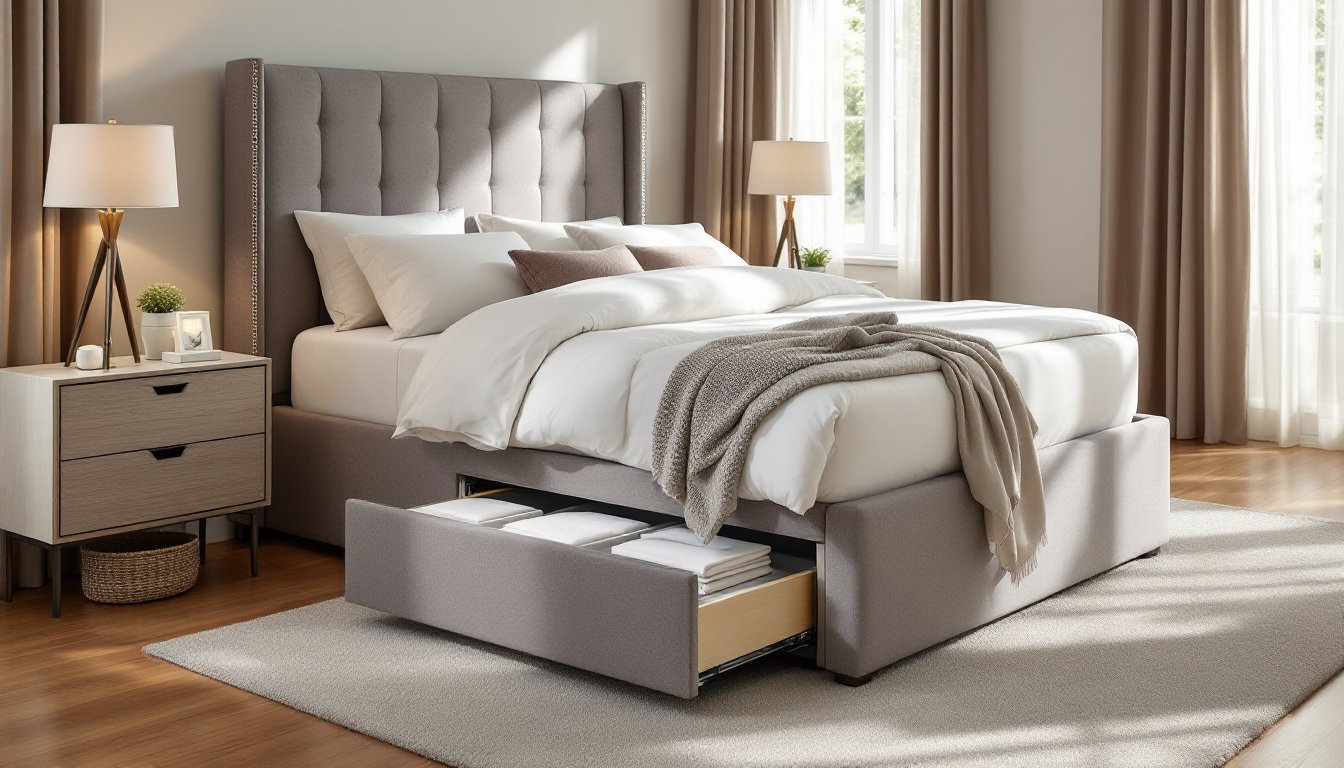
A king upholstered bed with built-in storage eliminates the need for separate pieces of furniture cluttering your floor plan. Under-bed drawers, lift-top platforms, or integrated shelving mean you’re not pushing a dresser against another wall or stacking containers in the closet. For homeowners working with tight square footage, that’s a game-changer.
The upholstered headboard and footboard also soften the bedroom’s visual weight compared to a wooden bed frame. You get warmth and texture without the industrial feel. That fabric-wrapped profile pairs well with modern, transitional, or even traditional décor, way more flexible than a stained wood bed that locks you into one aesthetic.
Beyond looks, an upholstered bed absorbs sound better than wood or metal. If you’ve got squeaky joints or live in an apartment with neighbors below, the padded frame and cushioned headboard reduce noise transmission. The padding also feels nicer if you’re sitting up in bed reading or watching TV, no cold metal bars or hard headboard edge digging into your back.
From a resale angle, a quality upholstered bed signals that the bedroom was cared for and thoughtfully designed. It’s the kind of upgrade that works in your favor when showing a home.
Key Features to Look For When Selecting Your Bed
Storage Design Options and Upholstery Materials
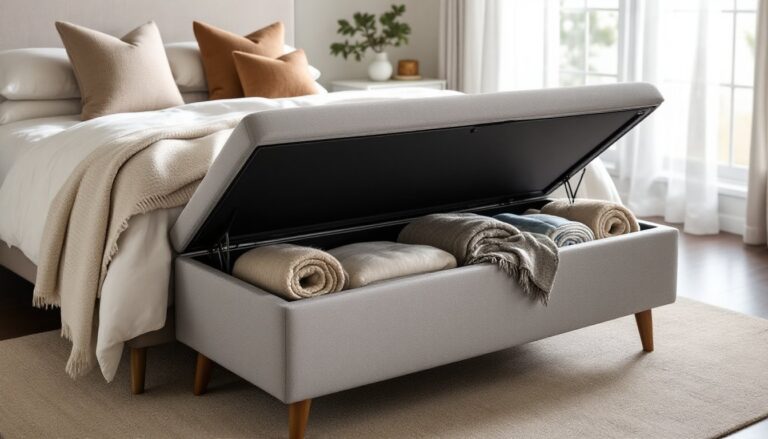
Storage mechanisms come in three main styles: under-bed drawers (typically two to four rolling drawers on ball-bearing slides), lift-top platforms (where the entire sleep surface hinges up to reveal a large cavity), and storage shelves integrated into the footboard. Drawers are easiest to access for everyday items like extra linens: lift-tops hold bulk storage like off-season bedding but require more effort to open repeatedly. Footboard shelves work well for decorative baskets or books if you don’t need daily access.
Examine the drawer slides. Full-extension, ball-bearing slides (not cheap plastic glides) let you pull drawers all the way out without tipping. Check weight ratings, quality beds handle 75–100 lbs per drawer. If the spec sheet doesn’t list it, that’s a red flag.
Upholstery fabric matters for durability and maintenance. Polyester blends resist staining better than 100% cotton and cost less, but linen or cotton offers a more natural feel if your household has low spill risk. Microsuede cleans easily and feels soft but can pill with heavy use. Leather is durable but pricier and needs conditioning. Whatever you choose, ask about the fabric’s Wyzenbeek rating (a measure of rub-resistance for upholstery). Anything above 15,000 cycles is suitable for a bed: 20,000+ is ideal if you have kids or pets.
The frame construction is invisible but critical. Hardwood or plywood platforms with reinforced corner blocks outperform particle board significantly. Metal leg supports should be recessed slightly so they don’t snag on carpet or flooring. If the bed relies only on center-rail support without diagonal cross-bracing, it’ll sag within years.
Better beds also feature removable, washable slipcovers on the headboard or upholstered panels. That’s a major maintenance win for a fabric piece.
Installation and Setup Tips for Your New Bed
Most king upholstered beds arrive in multiple pieces: the headboard, footboard, side rails, slat support system, and storage components. Measure your doorway and hallway before delivery, a king frame is roughly 76 inches wide and 80 inches long, and the headboard can be 40+ inches tall. You may need to remove the legs or footboard to get it through narrow passages.
Assembly usually requires an Allen wrench, a screwdriver, and a helper. The side rails attach to the headboard and footboard with bolts or screws: don’t overtighten these, as you can strip the threads. Lay out all parts on the floor first and match them to the instruction sheet, missing a bolt now beats discovering it after final assembly.
The slat support (a series of wooden or metal slats that hold the mattress) must sit evenly across the frame. Some beds use a center rail for extra support: others rely on the side rails alone. If the slats are uneven, the mattress will settle into dips and your back will know about it. Use a level to confirm the bed sits flat before adding your mattress.
For under-bed drawers, ensure they glide freely by running them in and out several times before loading them. If a drawer binds, check that it’s aligned with its neighbors and that the slides aren’t twisted. Apply a furniture sliding aid or silicone spray (not WD-40, which is flammable) if drawers feel sticky.
Leave the bed in its room for 24 hours before making it up, so the wood and fabric acclimate to temperature and humidity. This reduces the risk of warping or fabric shrinking after you’ve invested time in perfect bedding.
Maximizing Storage Functionality and Longevity
Use drawer organizers (fabric cubes, dividers, or shallow boxes) to keep linens and off-season clothing from shifting around. Label the drawers so everyone knows which one holds what, saves the “digging through three drawers to find a pillowcase” routine. Avoid overstuffing: jamming too much weight into one drawer will stress the slides and make them hard to open.
Wash the upholstered sections regularly using a fabric-safe vacuum attachment, and spot-clean spills immediately with a solution of mild dish soap and cool water. Blot, don’t rub. For stubborn stains, resources like The Handyman’s Daughter and Apartment Therapy offer tested strategies for upholstered furniture care. Flip or rotate your mattress every three months to prevent uneven wear, and use a mattress protector to guard against moisture and dust.
Flip the bed frame itself if it’s a lift-top model: the platform experiences wear on the underside where the hinges and support brackets live. Check these hardware connections yearly, especially if the bed gets heavy use. Tighten any bolts or screws that have loosened.
If a drawer slide breaks, you can usually order a replacement from the bed manufacturer or a hardware supplier. Upholstery tears are repairable with fabric glue and matching thread, though deep rips may require professional re-upholstering, a worthwhile investment if the frame is otherwise sound. For DIY patch kits, detailed step-by-step guides on platforms like Instructables walk you through the process.
Keep the area around and under the bed clean and dry to prevent mold or pest issues. Good air circulation under the bed extends the life of the mattress and frame wood.
Conclusion
A king upholstered bed with storage is a legitimate investment that pays dividends in both function and aesthetics. The key is choosing a frame with solid construction, quality fabric, and reliable drawer slides, not the fanciest headboard or the lowest price. Once installed, simple maintenance and smart organization keep it running smoothly for years. If you’re serious about reclaiming bedroom space without sacrificing comfort or style, this bed format delivers.