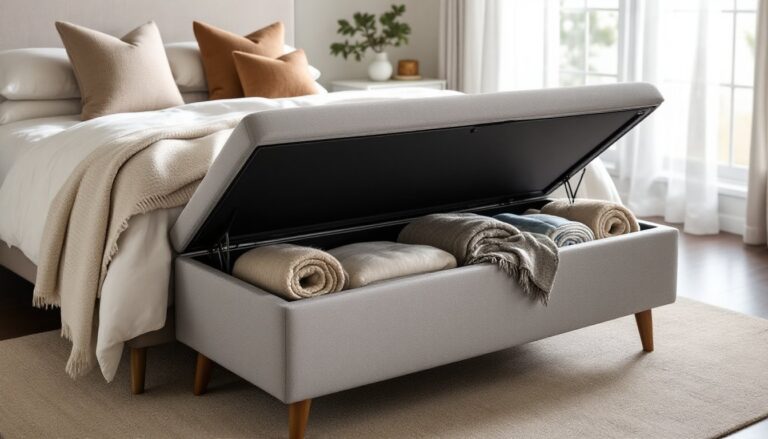
An entryway sets the tone for your home before guests even step inside. A well-chosen farmhouse entryway bench does triple duty: it provides a practical spot to sit and remove boots, adds authentic rustic charm, and often includes hidden storage for coats and shoes. Whether you’re renovating your entire foyer or just refreshing the first impression, the right bench becomes both functional furniture and a design statement. This guide walks you through seven farmhouse entryway bench ideas, from classic wood designs to budget-friendly DIY builds, so you can choose one that matches your home’s character and your skill level.
Table of Contents
ToggleKey Takeaways
- A farmhouse entryway bench combines practical seating with storage and rustic design, serving as both functional furniture and a statement piece that welcomes guests.
- Classic wood benches with storage typically measure 48–60 inches wide with 18–20 inch seat heights, costing $150–$300 in DIY materials or $400–$800 ready-made.
- Budget-friendly DIY farmhouse entryway bench ideas, like wooden crate bases or stacked 2×10 lumber, can be completed for under $150 without advanced carpentry skills.
- Metal frames paired with performance linen upholstery create a modern-farmhouse aesthetic that handles muddy boots better than delicate fabrics.
- Layering textures with throws, baskets, plants, and strategic lighting transforms your farmhouse bench into a styled entryway that feels both curated and genuinely livable.
Classic Wood Bench With Storage
The timeless farmhouse entryway bench with storage combines solid wood construction with practical shelving underneath. These benches typically measure 48 to 60 inches wide, 18 inches deep, and 36 inches tall, proportions that fit standard entry hallways without blocking doors or traffic flow.
Look for designs featuring reclaimed or distressed pine for authentic rustic character. The seat itself should be 18 to 20 inches high, giving adults and teens a comfortable perch for pulling on boots. Below the seat, open cubbies or closed cabinets hold shoes, seasonal gear, and hats.
Construction usually involves a sturdy pine frame built with mortise-and-tenon joints or heavy pocket hole screws, topped with a bench seat that’s either solid wood planks or tongue-and-groove boards. A coat of milk paint in cream, gray, or soft blue adds authentic farmhouse appeal while letting wood grain show through.
If you’re handy, building one takes a weekend. Materials, pine lumber, pocket hole hardware, and finish, run $150 to $300 depending on wood grade. For a ready-made option, expect to pay $400 to $800 from retailers specializing in farmhouse furniture.
Rustic Metal Frame and Upholstered Seat
Pairing industrial metal with soft upholstery creates a modern-farmhouse look that’s less precious than all-wood designs. These benches typically feature a welded steel frame, often with a dark finish like matte black or antiqued bronze, supporting a cushioned seat in linen, canvas, or performance fabric.
The seat height and depth remain practical: 18 inches high, 16 to 20 inches deep. Metal legs keep the design visually light, preventing the piece from feeling heavy in a narrow entryway. Some versions include a low shelf between legs for boots or a basket.
Choosing fabric matters. Performance linen (solution-dyed, stain-resistant) handles dirty boots and coats better than delicate weaves. Neutral tones, cream, warm gray, or linen white, blend with most décor schemes. If you want color, soft sage, dusty blue, or muted terracotta feel farmhouse-authentic without being trendy.
Ready-made metal-frame benches with upholstered seats range from $300 to $700. Building one yourself requires welding skills or sourcing a metal base kit and adding a custom cushion: total cost runs $200 to $400 if you’re comfortable with a bench vise and basic metalwork.
Weathered Shiplap Bench Design
Shiplap paneling brings farmhouse authenticity to bench faces, side panels, or entire backing walls. A shiplap-front bench is lightweight, visually interesting, and easier to build than you’d expect. Horizontal 1×6 or 1×8 boards are nailed or screwed to a simple wooden frame, creating the signature overlapped-edge look.
Weathering the shiplap, using whitewash, wire brushing, or distressing techniques, enhances the rustic effect without looking artificial. Start with raw lumber and apply whitewash (diluted paint or pre-made stains) to let the wood grain show. Sand edges lightly to expose fresh wood beneath, mimicking natural wear from years of use.
The underlying structure is straightforward: 2×4 lumber forms the frame, pocket holes join pieces, and shiplap boards cover the front and sides. Underneath, open shelving holds baskets for organization. The top can be solid plank or tongue-and-groove, finished with a natural stain or whitewash.
This design works especially well in narrow entryways because shiplap visual texture makes tight spaces feel intentional rather than cramped. Weathered shiplap benches cost $250 to $500 in materials if built DIY, or $600 to $1000 pre-made.
Window Seat Style Entryway Bench
If your entryway has a bay window, deep alcove, or blank wall, a custom window seat–style bench maximizes that footprint. These benches are wider (60 to 72 inches) and shallower (14 to 18 inches deep), designed to fill a defined space like a built-in.
Construction involves anchoring the bench frame to wall studs with lag bolts, ensuring stability even when children bounce or adults lean against it. Under-seat storage is essential here, either hinged lids for access or pull-out drawers. The seat itself is often upholstered or topped with a cushion for comfort during those moments when you need to sit and organize your day.
Backrest options vary. Some benches butt against the wall with decorative paneling behind: others add a low rail or decorative beadboard backing for visual interest. Shelving above the bench, floating shelves or a low cabinet, displays decorative items or holds lightweight seasonal gear.
A window seat requires careful measurements and, if anchoring to walls, ensuring you’re hitting studs or adding blocking. Building one takes two to three days. Materials run $200 to $400: professional installation costs extra. Ready-made window seat benches start at $500 and climb to $1200 depending on customization.
DIY Budget-Friendly Options
Not everyone has a weekend and $500 to spare. Simple builds prove that farmhouse charm doesn’t require perfection or expense. The easiest farmhouse entryway bench with storage starts with a basic wooden crate base, industrial crates are inexpensive and stack or align side-by-side, topped with a cushion and plywood sealed with stain.
Another quick build: 2×10 and 2×12 lumber (nominal sizes that are actually 1.5 inches thick and 9 or 11 inches wide) cut and stacked to form a box structure. Sand the whole thing, apply whitewash or a light stain, add a couple of cushions, and you’ve got a farmhouse bench for under $150 in materials. No fancy joinery required, pocket holes or even finish nails hold it together.
Free DIY furniture plans are available online from sites like Ana White, which offer beginner-friendly step-by-step guides for farmhouse pieces. These plans specify exact lumber cuts, tool requirements, and finishing techniques, removing guesswork.
If you inherit an old bench or dresser, repurposing is the ultimate budget move. Sand, restain, and add new hardware for farmhouse flair. A $20 thrift-store find becomes a statement piece with 4 hours of work. The key is honest assessment: if the structure is solid and joints aren’t loose, refinishing works. If it’s wobbly, skip it.
Styling Your Farmhouse Bench for Maximum Impact
A beautiful bench matters less if your entryway styling undermines it. Start by considering scale and color. A light cream or whitewashed bench works in almost any entryway: darker stains (walnut, espresso) require more intentional décor to avoid feeling heavy.
Layering textures makes the space feel lived-in. A chunky knit throw draped over the bench seat, a woven basket stored underneath for shoes, and a few plants on a shelf above create depth without clutter. Avoid matching sets: mixing finishes, a distressed wood bench with a modern metal coat rack, an upholstered farmhouse bench with contemporary wall sconces, feels curated, not catalog.
Lighting sets mood. A farmhouse entryway benefits from a pendant light or flush mount with a warm-white bulb (2700K color temperature). This brightens the space and draws the eye upward, making narrow entryways feel taller. Pair it with a simple mirror to amplify light and check your appearance before heading out.
Personal touches matter most. Your entryway should reflect your family’s life: kids’ sports gear, seasonal décor, pet supplies. A farmhouse bench accommodates this reality. Open shelving visible to guests should be organized: hidden storage under the seat keeps the chaos. Hooks above the bench hold coats: baskets corral gloves and hats. The goal is a bench that’s both beautiful and genuinely functional. Design sources like Country Living’s entryway ideas showcase how real homes balance style and daily life.
Conclusion
A farmhouse entryway bench is one of those rare projects that delivers both style and substance. Whether you build a simple crate-based design, invest in a quality wooden piece, or go custom with shiplap detailing, the result is a functional hub that welcomes guests and streamlines your daily routine. Start by measuring your entryway, assessing your skill level, and deciding what storage matters most. Then choose the design that fits both your space and your budget. Your entryway will look intentional, and your family will thank you every time they sit down to pull off muddy boots.