An F150’s bed is valuable real estate, but toss a few tools, camping gear, and weekend projects in there and chaos takes over. You’re hunting for the adjustable wrench under a coil of rope, or worse, something rolls out onto the highway mid-drive. Smart bed organization doesn’t just protect your cargo: it maximizes your truck‘s utility and keeps safety hazards in check. Whether you prefer ready-made systems or want to build custom storage solutions, F150 bed storage comes down to matching your needs with the right approach. Let’s walk through what works.
Table of Contents
ToggleKey Takeaways
- F150 bed storage organization prevents cargo damage, improves safety, and protects your truck’s resale value by keeping tools and materials secure and accessible.
- Tonneau covers offer weatherproof protection for seasonal storage, while crossbed tool chests provide quick access for daily work—choose based on how frequently you reach into your bed.
- F150 bed storage solutions range from affordable DIY options ($150–$300 for custom builds) to premium drawer systems ($2,000–$3,500), so match your budget and actual use case rather than aesthetic inspiration.
- Always measure your specific F150 bed dimensions at three points and use existing bed rail mounting holes to avoid drilling, drilling creates safety hazards and permanent modifications.
- Your F150’s payload capacity (typically 1,400–1,500 lbs on SuperCrew models) limits how much storage weight you can add, so account for the system, tools, and cargo combined to maintain safe handling and braking.
- Proper weatherproofing with silicone seals, exterior-grade materials, and drainage prevents rust and fastener corrosion, ensuring your storage system protects your truck bed’s finish long-term.
Why F150 Bed Organization Matters
An unorganized truck bed invites damage and danger. Tools shift during braking, puncture undercoatings, or fly off on turns. Loose cargo becomes a liability, both for your truck’s resale value and for drivers behind you. When everything has a place, you spend less time digging and more time working. You also spot missing items faster, which saves expensive trips back to the job site.
F150s (both SuperCrew and SuperCab models) come in 5.5-foot, 6.5-foot, and 8-foot bed lengths. Each offers different organization possibilities, and your choice of system depends on what you carry. A contractor moving materials daily has totally different needs than someone storing camping gear seasonally. Understanding your actual use case, not Pinterest inspiration, is where smart storage begins.
Proper organization also preserves your truck’s bed. Without barriers or mats, metal-on-metal contact accelerates rust in regions with road salt. Dividers and liners protect finish and reduce load shifting. Over time, a well-organized truck bed holds its value better and functions safer.
Built-In Storage Options For Your Truck Bed
Tonneau Covers With Integrated Storage
A tonneau cover rolls or folds over your bed, keeping weather out and prying eyes away. The real advantage for storage is the secure, weatherproof seal, your cargo stays protected whether you’re parked overnight or hauling supplies across state lines. Some tonneau models include under-cover storage pockets, side rails, or even integrated drawers built into the frame.
Roll-up soft tonneau covers (typically 9–16 oz vinyl or fabric) are lighter and cheaper than hard tri-fold or folding hard tonneau covers. Soft covers work fine for seasonal storage or light-duty truck owners. Hard tonneau covers handle daily contractor use better, they’re more durable but cost 2–3 times more. If you plan to carry ladder racks or overhead gear, confirm tonneau compatibility: some systems conflict with roof-mounted equipment.
Manufacturers like weathertech and decked offer tonneau-plus-drawer combos, though you’ll pay a premium. A standalone tonneau runs $300–$800, while integrated drawer systems jump to $1,200–$2,500+. Installation takes 1–3 hours with basic hand tools and typically doesn’t require drilling into the bed. Fasten mounting brackets to existing bed rails using clamps or bolts, no permanent modification needed.
The downside: tonneau covers reduce easy access. If you constantly reach into your bed, a cover becomes annoying. They also don’t divide your cargo internally, so you still need bins or boxes inside.
DIY Storage Solutions For Maximum Flexibility
Tool Boxes And Chest Organizers
A crossbed tool chest spans the width of your truck bed, just behind the cab. These steel or aluminum boxes secure with bolts or clamps and hold hand tools, fasteners, and small gear without eating full bed depth. Crossbed units typically start at $200–$400 for basic steel, with aluminum bumping to $400–$800 depending on size and locking mechanisms.
The advantage is accessibility. Open the lid, grab what you need, and you’re working. Installation is straightforward: position the chest, align bolt holes or mounting brackets with bed rails, and tighten fasteners with a wrench. No special skills required. Some owners pair a crossbed chest with a tonneau cover for weatherproof security plus organized access.
For DIY builders, the option to fabricate custom chest units exists. Using 3/4-inch plywood as the base, 2×4 lumber for frame, and exterior-grade hinges, you can build a chest tailored to your bed dimensions. Seal all wood with polyurethane or paint to resist moisture. A basic 4-foot DIY chest takes one weekend and costs $150–$300 in materials. Overkill for many, but handy if you want non-standard dimensions or a specific aesthetic.
Wall-mounted side-rail tool organizers clip onto F150 bed rails and hold smaller items, tape measures, hammers, spray bottles, without reducing bed usable space. These cost $50–$150 and take 15 minutes to install. They won’t hold bulk cargo, but for trades people using the same daily tools, they’re efficient.
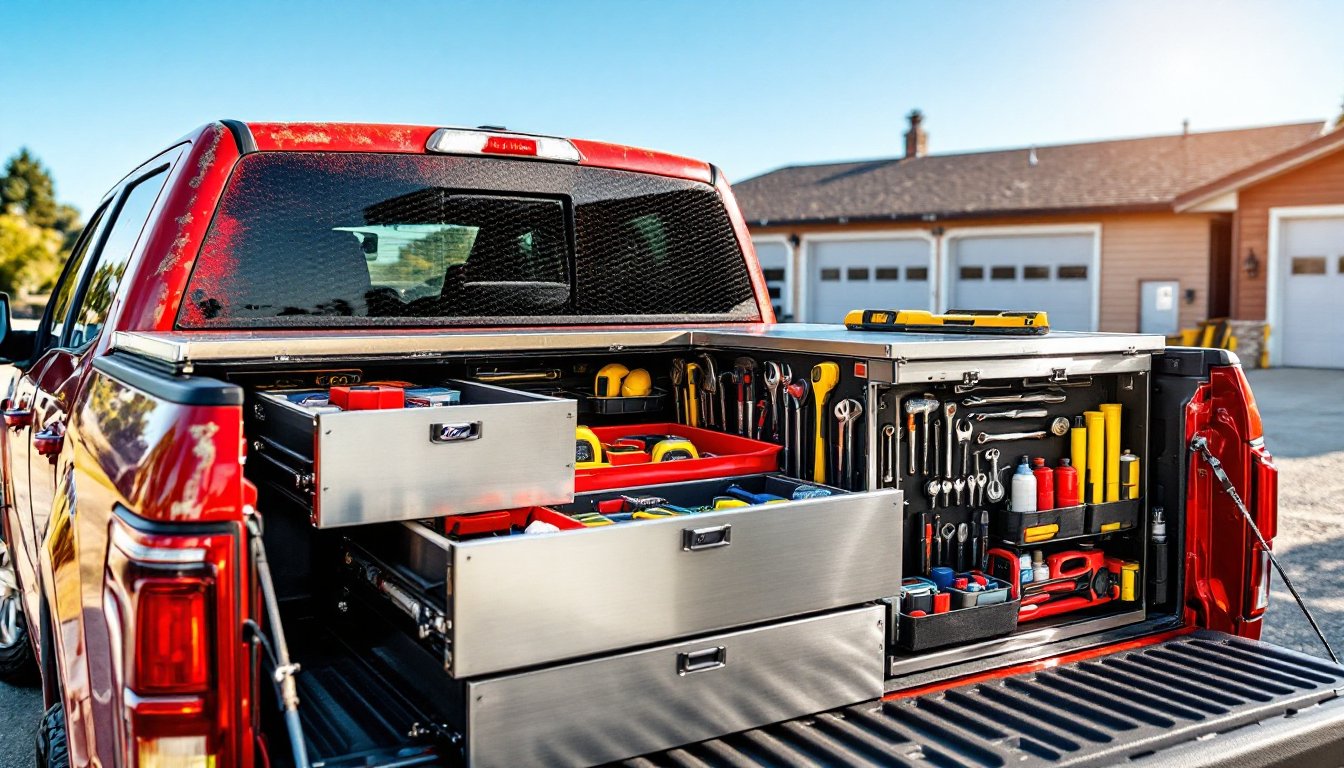
Drawer systems deserve mention here. Brands like decked and weather tech offer modular drawer units that slide into your bed on aluminum rails. You get sealed drawers, organized compartments, and full bed access by sliding units in and out. The trade-off is cost (typically $2,000–$3,500 installed) and loss of some bed depth. These work best if your budget allows and you prioritize organization over hauling capacity.
Installation Tips And Best Practices
Start with bed prep. Clean the truck bed thoroughly with a degreaser and pressure washer. Remove old stickers, dirt, and rust. If you’re drilling or mounting anything, mask off areas and wear safety glasses and work gloves. Rust can hide sharp edges, treat it seriously.
Measure your bed dimensions carefully. Standard F150 beds don’t always match nominal sizes, especially on used trucks where prior owners installed custom racks or liners. Take measurements at three points (front, center, rear) to account for any frame sag or asymmetry. Write everything down: phone photos help too.
For bolt-on installations (tonneau, crossbed chests, rail organizers), use the truck’s existing attachment points first. F150 bed rails have integrated bolt holes and mounting pockets, use these instead of drilling new holes. If you must drill, wear hearing protection and a dust mask: use a metal-cutting drill bit and go slowly to avoid binding. Back holes with a backing plate on the underside to distribute clamp force and prevent pull-through.
When installing any system that adds weight, know your payload. A stock F150 Super Crew has a payload capacity around 1,400–1,500 lbs (varies by year and powertrain). A loaded storage system, camping gear, tools, and supplies add up fast. You won’t exceed payload with typical organization, but overloading hurts handling, suspension life, and braking performance. Check your truck’s door jamb placard for exact numbers.
For DIY builds using wood or lightweight composite, use exterior-grade adhesive and stainless or galvanized fasteners. Avoid interior plywood: it delaminates when wet. If sealing wood, apply two coats of polyurethane or marine paint. Allow 24 hours between coats and 48 hours before loading.
Weatherproofing matters. Seal any gaps around tonneau rails, drawer edges, or chest hinges with automotive silicone or weatherstripping. Standing water corrodes fasteners and promotes rust. Ensure drainage: slightly slope surfaces so water doesn’t pool, and check drain holes after heavy rain.
Some storage systems require bed liner removal. If you have a plastic-sprayed bed liner, installation conflicts may exist, discuss compatibility with the manufacturer before purchase. Bed mats (rubber, plastic, or felt) protect your liner and can accommodate most clamp-style organizers.
Conclusion
Smart F150 bed storage balances your actual needs, budget, and truck use. Off-the-shelf tonneau covers suit weather protection: crossbed chests work for tool-heavy trades: drawer systems deliver maximum organization for those who can afford the investment. Popular mechanics has reviewed many options if you want comparisons before buying. Measure first, install carefully, and you’ll transform your truck bed from chaotic to professional in a weekend. The payoff isn’t just cleaner cargo, it’s safer, more efficient work every time you use your truck.