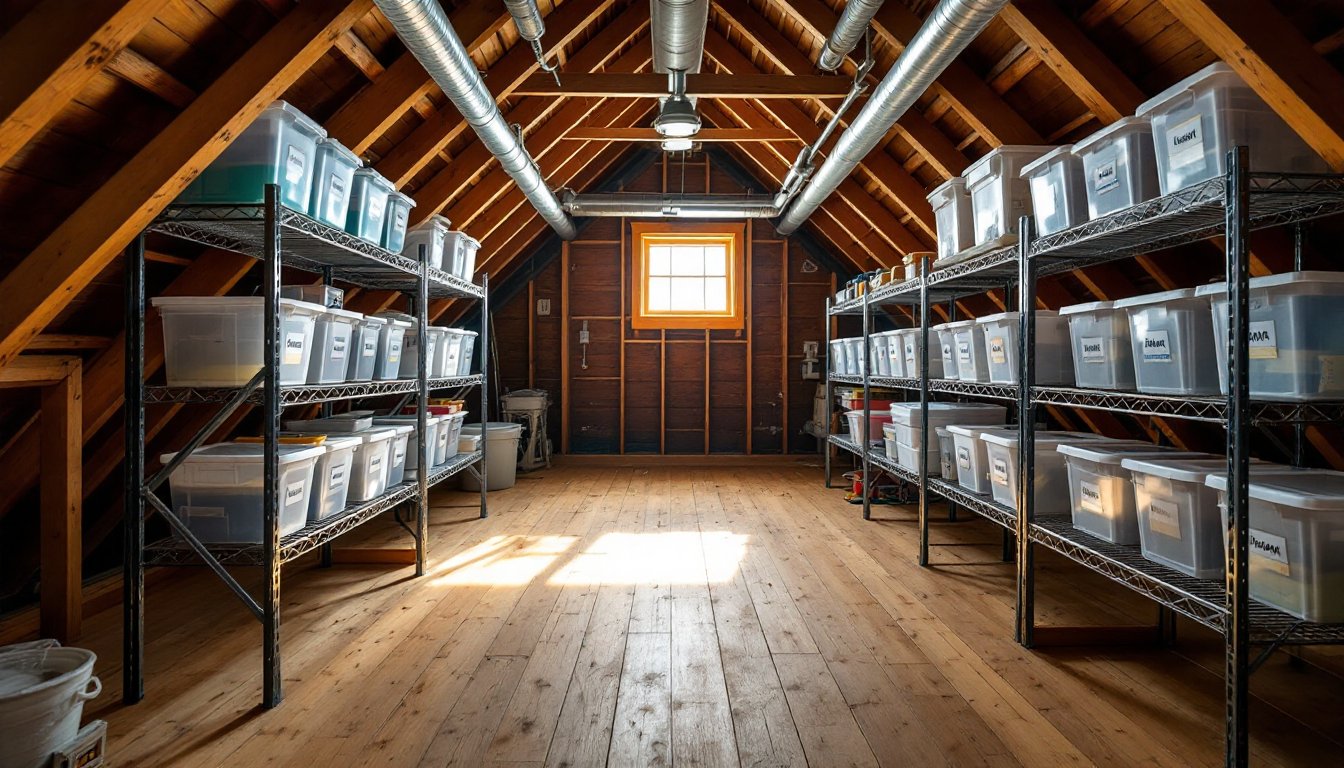
An attic with low ceilings often feels like wasted potential. You’ve got square footage, but the moment you stand up, your head meets a rafter. Millions of homeowners face this exact frustration, they know the attic could hold seasonal decorations, old files, or camping gear, but the cramped headroom makes storage feel impossible. The good news? Low ceilings don’t mean you’re stuck with floor-to-ceiling clutter or expensive structural work. With the right storage strategies, you can reclaim that space efficiently, safely, and without major renovation costs.
Table of Contents
ToggleKey Takeaways
- Low ceiling attic storage solutions rely on vertical and overhead storage systems like wall-mounted shelving, pegboards, and joist-hung racks that maximize space without requiring you to stand upright.
- Always measure ceiling height, map obstructions like ducts and vents, and check local building codes before installing storage to ensure safety and compliance.
- Use low-profile furniture under 4 feet tall, such as metal shelving units, stackable plastic bins, and shallow cabinets, which fit tight clearances while maintaining durability in temperature-fluctuating attics.
- Clear, labeled plastic bins at eye level when crouching make seasonal items easy to find and protect contents from dust and moisture in cramped attic spaces.
- Maintain at least 24–30 inches of aisle width and never block soffit vents or insulation, as proper ventilation prevents mold and structural damage in low ceiling attics.
- Elevate all storage furniture 2–4 inches off the floor to allow airflow underneath, which is essential for preventing moisture pooling and maintaining attic integrity.
Why Attic Storage Becomes Challenging With Low Ceilings
Low ceilings in attics, typically under 4.5 to 5 feet, create three main headaches. First, you can’t stand upright or move bulky items easily, which forces you to stoop, crawl, or make multiple trips. Second, standard tall shelving units and storage cabinets won’t fit, so off-the-shelf solutions often fall flat. Third, ventilation and insulation matter: attics need airflow to prevent moisture buildup and mold, so cramming dense storage against walls or blocking soffit vents defeats that purpose.
The challenge isn’t just physical, it’s also about code compliance. If your attic has active HVAC ducts, electrical runs, or insulation, you’ll need to avoid blocking them. Many jurisdictions also require minimum clearance around access points for safety and emergency egress. Before buying a single shelf, measure your ceiling height at the lowest point, map out obstructions (ducts, vents, wiring), and check your local building code or ask your municipal building department if attic storage modifications need approval. That assignments upfront saves you from costly mistakes and safety hazards.
Vertical Storage Systems For Compact Attics
When floor space is limited but ceiling height is the constraint, thinking vertically sounds counterintuitive, until you realize you’re not building up, you’re building smart. Wall-mounted solutions and overhead racks let you store more without increasing the footprint or requiring you to duck under shelving.
Wall-Mounted Shelving and Pegboards
Flat wall-mounted shelving is your friend in low ceilings. Install shelves 12 to 18 inches apart vertically, which accommodates most storage bins and boxes without wasting air between shelves. Use adjustable steel brackets (rated for your load) rather than wood, because steel won’t sag over time, important in an attic where temperature and humidity swing.
Measure your wall studs (typically 16 inches on center) and use lag bolts (also called coach bolts) driven directly into the wood. If studs aren’t where you need the shelf, toggle bolts work for drywall, but they’re rated lower, check weight limits. For pegboards, same principle: mount directly to studs with appropriate hardware, and use heavy-duty hooks rated for your items.
One real advantage: pegboards and rails let you reconfigure quickly. If seasonal storage needs change (more holiday decor one year, less the next), you just move hooks and shelves, no drilling new holes.
Overhead Hanging Solutions
Overhead racks, mounted to your joist system, are gold in tight spaces. They hang down 12 to 18 inches from the rafters, leaving you room to walk (or crouch) underneath. Install them perpendicular to the joists so weight distributes properly.
Use joist hangers rated for your load and bolt them directly to the wood. Residential attic joists typically handle 20 to 40 pounds per linear foot depending on size (2×6, 2×8, etc.), so don’t exceed that. Spread the load across multiple joists when possible. Avoid hanging racks over walkways, you want to be able to move freely, and ensure they don’t block soffit vents or HVAC ducts. This approach works brilliantly for lightweight, seasonal items: holiday boxes, camping gear, pool supplies. Just don’t use it for heavy tools or dense boxes, which belong lower or on walls.
Low-Profile Storage Furniture That Fits Tight Spaces
Standard 6-foot tall shelving units won’t squeeze into a 4.5-foot attic. Instead, hunt for low-profile alternatives that make sense in tight clearance.
Flat storage containers and stackable bins are your workhorse. Plastic bins (like those from Rubbermaid or similar manufacturers) come in 12-inch to 18-inch heights, stack safely, and seal to keep dust and moisture out, crucial in attics. Label them clearly on the side and front so you don’t have to pull every box to find what you need. Store frequently accessed items at eye level when crouching: less-used seasonal stuff can go higher or lower.
Low-profile shelving units (under 4 feet tall) fit perfectly. Look for metal units rated for garage or utility use: they’re affordable and typically support 300+ pounds per shelf. Avoid particleboard shelves in attics, moisture causes them to sag or warp. Metal or plywood (at least ¾-inch) holds up better.
Shallow cabinets (10 to 12 inches deep) work against walls. They don’t jut into walkways and give you vertical storage without eating up the room you need to move through. Hardware stores carry garage cabinets that fit this bill: some are modular, so you can stack or arrange them as needed.
Whatever furniture you choose, elevate it slightly off the floor, even 2 to 4 inches on small feet or risers. This allows air to flow underneath, prevents moisture from pooling, and makes cleaning easier. In attics, that airflow is non-negotiable.
Smart Organization Tips For Low Ceiling Attics
Storage is only half the battle: organization keeps you from losing items and wasting money replacing things you already own. With low ceiling constraints, every cubic inch counts.
Category ruthlessly. Before stuffing boxes, decide what actually belongs in the attic. Seasonal items (holiday decor, winter clothes) are ideal. Off-season sports gear, duplicate kitchen items, and old paperwork work too. Avoid storing anything sentimental without a plan, attics aren’t ideal for photo albums or important documents without climate control. Some homeowners benefit from practices found in Stylish Storage Solutions for small spaces, which emphasize intentional selection over accumulation.
Use clear bins for visibility. Opaque boxes hide their contents. Clear plastic lets you see at a glance what’s inside without opening it. Label the front and one side so the label is visible no matter how bins are stacked. Invest in a label maker: it’s faster than handwriting and looks professional.
Maximize aisle width. Don’t block your main path through the attic with storage. Aim for at least 24 to 30 inches of clearance for walking and maneuvering. Wider aisles feel safer and reduce the chance of bumping your head or damaging items as you move through.
Keep frequently used items accessible. Store seasonal things you grab once a year on higher or lower shelves. Things you access twice a season (like holiday lights or patio cushions) should be at eye level when crouching. This saves time and frustration.
Avoid blocking ventilation. Don’t pile boxes against soffit vents or eaves, and never lay storage directly over insulation unless it’s on top of rigid board or joists. Blocking airflow leads to moisture buildup, mold, and potentially structural damage. If you’re unsure where ducts or vents run, get a quick walkthrough from your HVAC tech or a home inspector.
Resources like Real Simple and Bob Vila’s attic storage ideas offer additional organizing tactics and design inspiration. For extra guidance on tight spaces, Temporary Storage Solutions: Reclaim your space covers flexible storage strategies that complement permanent attic setups.
Conclusion
Low ceiling attics don’t have to stay empty or overflowing. By combining wall-mounted shelving, overhead racks, low-profile furniture, and smart organization, you can transform a cramped, underused space into a functional storage hub. Measure twice, respect your joist capacity and ventilation, and use clear bins with labels. The result is a cleaner home, easier access to seasonal items, and the satisfaction of using every inch wisely.